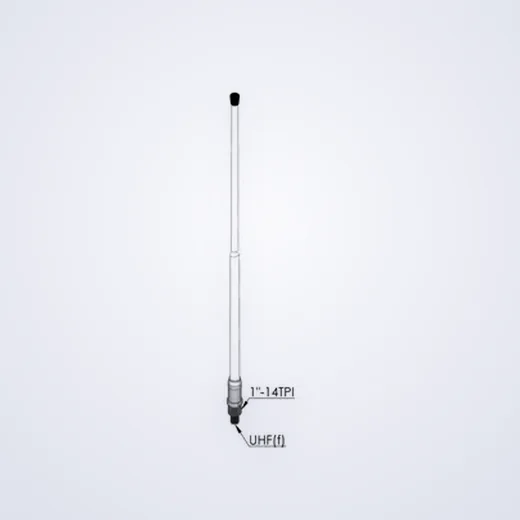
Why is VHF-two-way radio a separate marine antenna?
Marine VHF communication operates at 156 MHz, and the antenna for this frequency is not an accessory, but half a radio track. A station with a conventional 25 watts and a random “universal” antenna loses to stations with less power, but with an antenna tuned to the operating range: doubling the transmitter power adds a few percentages to the range, and the correct antenna, raised above and coordinated with the cable, changes the picture fundamentally.
The marine antenna differs from the car and also living conditions: salt, vibration, ultraviolet light and constant dampness. Mechanics and materials here are no less important than electrical parameters - the antenna, which through the season has become covered with corrosion on the threads, ceases to be an antenna and becomes a source of problems.
CX-4: What is the antenna?
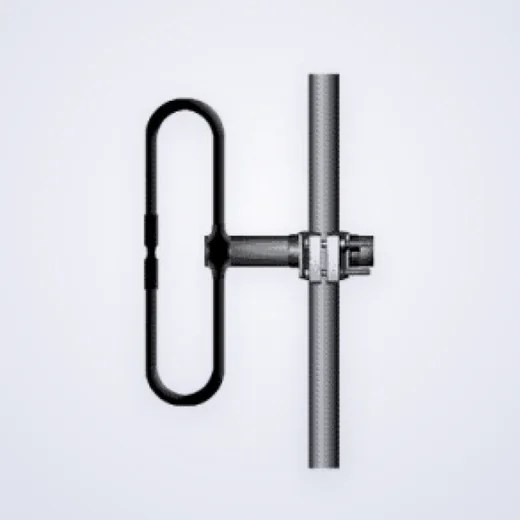
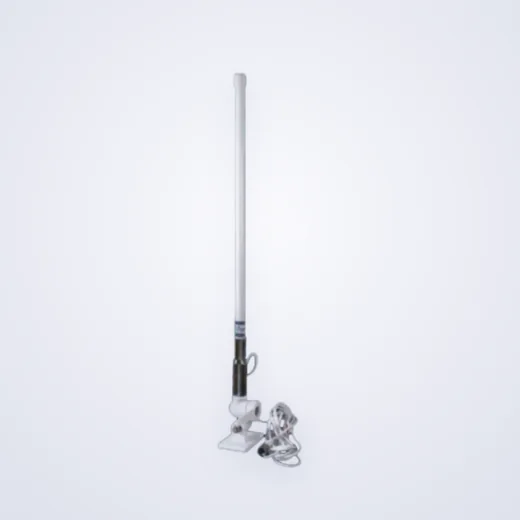
The CX-4 is a marine 156 MHz antenna in a marine configuration that comes with a standard mount. This is a complete solution: you do not need to separately select the bracket for the mast, leer or cabin - the mount is already included, and the antenna is put on the ship immediately after receipt.
The antenna is designed for the standard marine range of 156 MHz and is suitable for VHF-stations NSR, Icom, Entel and SAILOR – that is, most of the devices that are now installed on small and medium fleets. The warehouse position is available, shipment goes through Russia and Kazakhstan.
How to check compatibility before ordering
Three things to check before shipping. The first is frequency: the operating range of the station should overlap with 156 MHz; for a conventional marine VHF, this is the case, but if the station is rare or rebuilt, it is better to name the model and operating frequencies - check. The second is the connector on the antenna cable and on the station: it must coincide, otherwise you will need an adapter or soldering. The third is the installation site: the length and tracing of the cable depends on it, and the bracket in the CX-4 is standard, so it is enough to describe where it will stand.
Where to put and how to connect
The rule is one: higher and closer to the metal. Communication at 156 MHz is within line of sight, and each meter of ascent pushes the radio horizon away. The base of the antenna is placed on the metal surface of the cabin or mast - the body works as a grounding surface. Further, the feeder is wound to the station, and the quality of the connection in the connectors is checked during installation: weak contact with the water manifests itself as a “poor range” with fully serviceable equipment.
How to complete the package
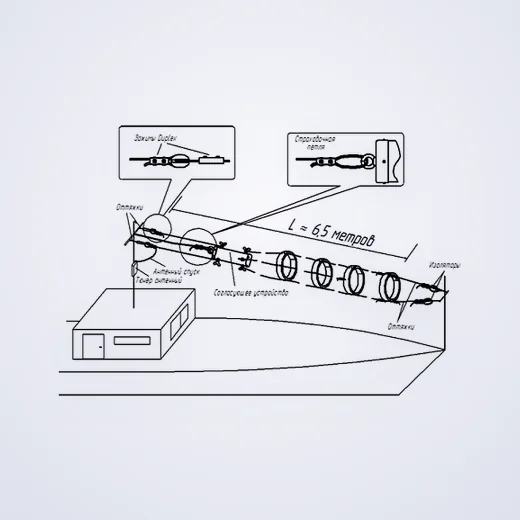
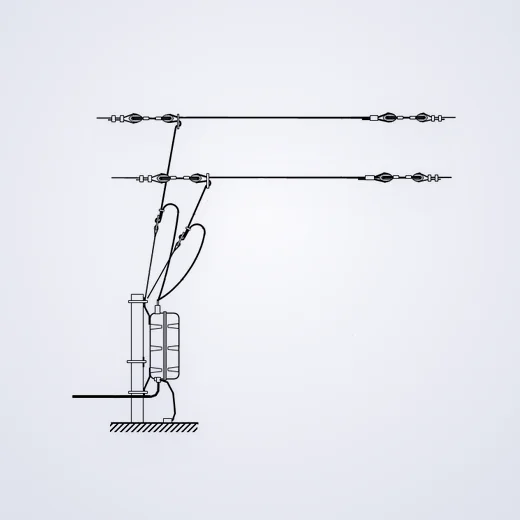
If the ship does not yet have a good feeder with connectors, it makes sense to order it along with the antenna - cable, compression and sealing on the pier then cost more than on the table. For a river vessel that needs a section of 300-336 MHz, instead of the CX-4, the TC-330D-1 VHF antenna or the ASH700 pin will suit, both with RRR documents. And for long-distance HF communication on the traverse look at the HF antenna RAK-7 and 2W-L10. All these items are available – they are in the “Equipment to the technical guide” block below.
How to place an order
Write a letter: name the model of the station, the ship and the place of installation of the antenna. We will respond with the price, availability and delivery time, if necessary, we will include cable and adapters in the kit. Delivery in Russia and Kazakhstan, accompanying documents go along with the equipment.