Portable GMDSS: gloved operation and readiness for use
RS and RKO rules: practical application
When selecting NSR NTW-1000 for emergency use, describe in advance how the operator will hold the radio, identify the controls and carry it with their gear. The number of batteries is a separate item in the quotation. Ease of operation and the radio features required by the rules need separate evidence.
Requirements covered here
Clause 2.6.12 of Part VII, Radio Communication Equipment, of the RKO classification and construction rules (PKPS) covers portable two-way VHF radiotelephones. Under subclause .1, their purpose includes on-scene distress communications between survival craft, the ship and a rescue unit. Use for onboard communications is permitted on the appropriate frequencies.
This article uses Part VII as introduced on 3 April 2026 by Order No. 29-p, with later amendments. For a vessel in service, determine applicability under clause 1.1.2 and the vessel's documents. This article does not prescribe the number of radios or equipment required.
What operation with gloves means in the rules
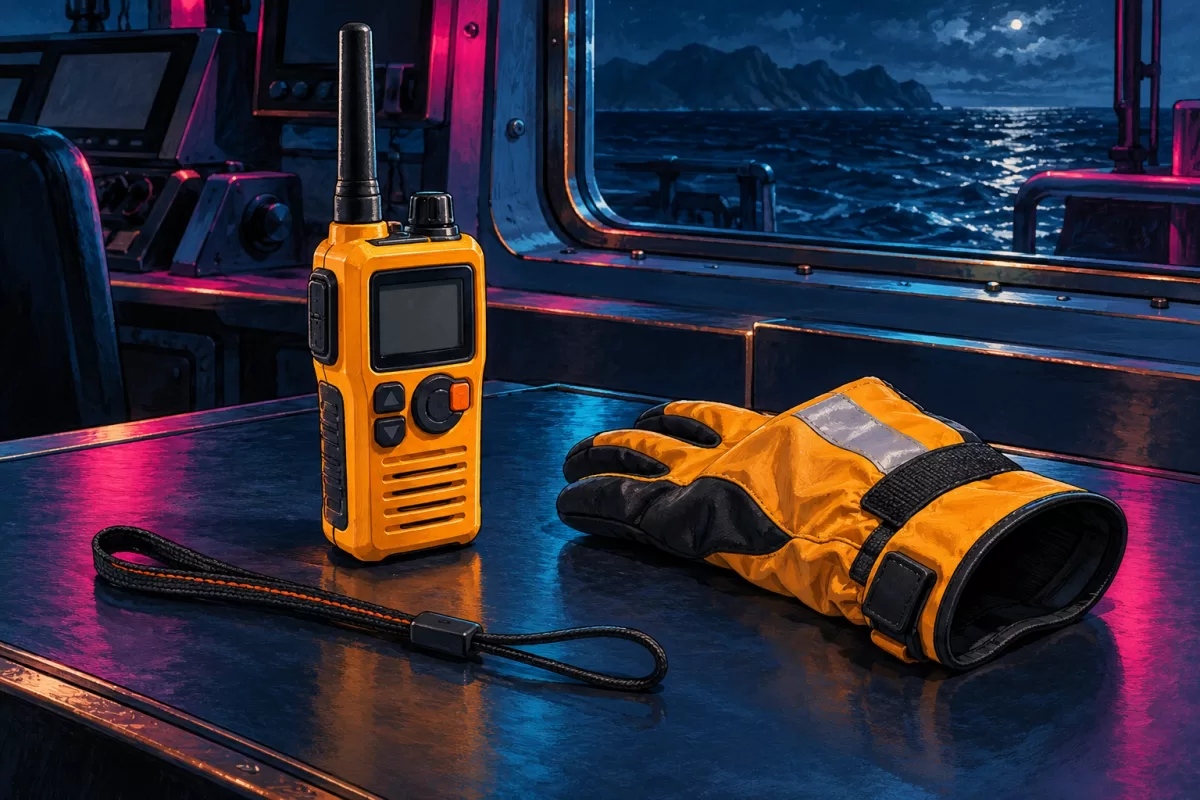
Clause 2.6.12.3 provides for operation by untrained personnel and by personnel wearing gloves intended for the immersion suits referred to in SOLAS regulation III/32.3. It also provides for one-handed operation except when selecting a channel.
Specify the actual gear and accessories in the enquiry. A claim such as large buttons does not establish compliance for the selected version. Confirm the features in its documentation and agree any demonstration under the manual and an authorised procedure. Purchasing a radio does not require improvised drop or immersion tests on serviceable shipboard equipment.
The channel must be identifiable and the radio ready for use
Subclauses 2.6.12.10 and .12 cover channel selection and identification, including the ability to tell under all ambient lighting conditions that channel 16 is selected. Subclause .13 requires readiness for operation within five seconds of switching on.
These are features of the radio in its intended configuration. The time spent finding it in a cabinet or unpacking it is separate from the start-up time. When agreeing the supply, identify the radio, battery, version and documents to which the evidence relates.
A demonstration of the controls does not require unauthorised radio transmissions. The responsible specialists determine the mode and acceptance steps from the applicable documentation and preserve the vessel's communications procedures.
Carrying the radio is part of the specification
Clause 2.6.12.3 provides for attachment to clothing and a wrist or neck strap. The strap must also have a suitable weak link to reduce entanglement risk. The requirements concern the complete portable radio assembly. An accessory that merely looks similar does not establish suitability.
In a quotation for the NTW-1000 ask for a list covering the radio, batteries intended for the application, attachment and strap, and documents. Confirm the exact contents and the purpose of each accessory separately. A clip from another kit is not suitable merely because the mount looks similar.
What to provide when selecting equipment
Specify the vessel, purpose of the kit, existing model, gear used, quantity and accessories to retain. For a replacement, provide the markings and documents for the existing parts. Specify routine onboard communications separately if they are also part of the request.
This lets you compare quotations on the same basis: an equipment list for the agreed purpose, confirmed operating and carrying features, and documentation for the specific version. SpectraTech confirms availability, condition, contents, price and delivery time in the quotation.
Sources
- RKO: new Part VII under Order No. 29-p: clauses 1.1.2, 2.6.12.1–.3, .10 and .12–.13.
- Amendments under Order No. 70-p.
- NSR NTW-1000 — SpectraTech catalogue listing.
The enquiry prompts are practical editorial guidance. Sources reviewed in Astana on 25 October 2026.