VX-1400: Calls from remote sites
A scheduled report and an unexpected call place different demands on an HF station. The base knows whom to expect and when for a planned report. An unexpected call may arrive while the operator is already speaking. Review these situations before buying a Vertex VX-1400. They determine whether one radio and one operator position are sufficient.
Request a quote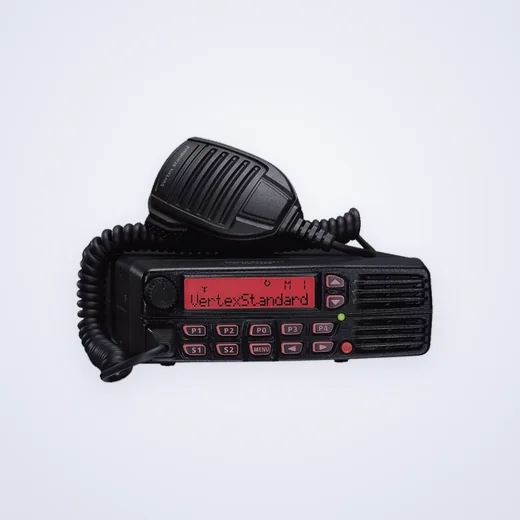
Start with events in a normal workday
Choose a few representative examples. A site finishes a shift task and reports the outcome. A manager needs an update from another site. An employee has a question that cannot wait for the scheduled report. Identify who initiates the call, who should receive it and what response is needed.
The key question is whether calls overlap. Ten sites with occasional scheduled sessions have different needs from two sites that call frequently. You do not need to calculate an ideal workload in advance. Describe routine operation and several real examples of inconvenient overlaps.
What counts as receiving a request
Hearing part of a conversation does not establish that the request was understood. Distinguish noticing a call, speaking with the right person and forwarding the issue to whoever must resolve it. Different staff may handle each step. The transceiver does not provide a request log or an automatic dispatcher.
Decide where unfinished requests are recorded and who is responsible for responding. An existing log or a simple rule can cover this workflow without buying software. For station selection, consider how long a complete conversation takes and when the operator becomes available again.
| Working situation | What to establish | What the station workflow needs |
|---|---|---|
| Report at the expected time | Who is waiting for the report and how long discussion takes | A defined slot for the scheduled exchange |
| Brief unplanned question | Who should notice the call and receive it in full | An agreed procedure when the operator is busy |
| Two calls close together | Whether the second site can wait | Decision on workload, operator positions and reception |
| Question requires another specialist | Who receives the details and who replies | Clear responsibility for the unresolved request |
What channel monitoring can provide
The VX-1400 manual describes SCAN as searching enabled memory channels for activity and Dual Watch as periodically checking a selected memory entry. These functions monitor channels in sequence. They do not provide independent continuous reception on several lines. Confirm the configuration of the offered radio. The functions help define station requirements but do not guarantee detection of every short call.
Discuss overlapping calls rather than asking for maximum scanning. Define the expected outcome for each site, what happens during a conversation and how staff identify an unanswered request. Choose equipment against the agreed scenario rather than the number of channels.
When one operator position may suffice
One station may be an option if communications can be arranged without simultaneous continuous reception. Assess the actual conditions, remote equipment and operator workload before determining suitability.
If two paths must remain available at the same time, specify that separately. Additional radio equipment serves reception, while an additional operator handles conversations. Decide on the whole workflow rather than treating those two needs as interchangeable.
What to provide before a final decision
For an existing base, collect anonymised examples: a scheduled conversation ran long, another site called and the operator forwarded the question to a specialist. Describe the outcome and what should improve. Sensitive data and private network settings are unnecessary for this initial description.
For a new site, describe expected events and participants instead. Agree with a technical specialist on how to verify the configuration under the intended conditions. One successful conversation does not establish performance when calls overlap. Test the situations that justify the upgrade.
Discuss the VX-1400 for your operation
The transceiver, antenna system, power, location and work define the station. Confirm full cost, availability and lead time in the quotation. Purchasing one item does not provide a complete network or guarantee communication with every remote site.
For a base in Krasnoyarsk, provide site and routine traffic details. For receipt in Almaty, give the address and organisation details. If equipment is for several sites, describe their needs separately. Delivery locations help plan shipment, and working situations guide equipment selection.
For installation, also see our review of VX-1400 placement and the remote panel. This review focuses on arranging calls so equipment capabilities and staff responsibilities are agreed before ordering.
- Events: reports and unexpected questions
- Overlaps: who is busy and what must be received
- Option: operator positions and request handling
- Verification: agreed working situations
Station planning diagram. It does not define radio procedures or guarantee receipt of every call.
Questions before buying
Does scanning guarantee receipt of a short call?
No. Assess the outcome for the particular scenario and configuration. Specify continuous reception separately if one direction requires it.
Does the number of sites determine the number of radios?
No. Call overlap, conversation length and operator work also matter. Choose the number of stations after reviewing those conditions.
Can I buy the VX-1400 alone?
Yes, request it as a separate item. For a complete station, identify retained equipment, required parts and any work. Agree on overall contents and cost separately.
The main product in our catalog
Vertex VX-1400
Price on request. We agree on station equipment, retained devices, accessories, work and lead time in the quotation.
Request a quoteDocumentation: Vertex Standard VX-1400 Operating Manual. We confirm which provisions apply to the version on offer.