Buy JRC JLR-21: heading and COG at low speed and with sideways drift
This is an explanation of two things. The angle on the circuit is not a measurement of the flow or a characteristic of the accuracy of the instrument.
The JRC JLR-21 is bought when the bridge is supposed to receive the direction of the bow of the vessel, not just the line of its movement on the map. The difference becomes especially clear when maneuvering: the hull is oriented in one direction, and the current and wind shift the ship to the other. Satellite compass and conventional path indication solve related but different tasks. Therefore, the choice of expensive device begins with the necessary data, not with the number of screens.
Two shooters on the same vessel
HDG is the direction of the nose. COG is the direction of movement relative to the ground, SOG is the speed of this movement. A conditional example: the nose is directed at 330°, and the ship moves in the direction of 345°. These statements can be correct at the same time. It is impossible to adjust one to another just for the sake of the coincidence of numbers: first you need to understand what is measured and to what point it refers.
For a river vessel, this is a useful difference in areas with the current; for a sea vessel, when maneuvering and working in a limited water area. But the divergence of directions cannot be automatically declared a compass malfunction or a ready-made flow measurement. The picture is influenced by driving conditions, wind, rotation and characteristics of incoming data. At one angle, you cannot calculate all the active forces.
What adds to JLR-21
In the JRC manual, the principle of determining the course is related to the orientation of the antenna base by GPS signals. It is different from getting a direction to move a single point. The JLR-21 screens separately feature HDG, SOG and COG. Therefore, the presence of coordinates and arrows of movement in another navigator does not prove that the problem of the source of the course has already been solved.
When choosing a system for a maneuvering vessel, formulate what result you need: see the direction of the nose on the bridge, transmit the course to the radar or compare it with the movement relative to the ground. These needs can exist simultaneously. They should not be combined into the vague requirement that “GPS should show everything.”
| Situation | What data is different | Question of equipment |
|---|---|---|
| The ship moves sideways relative to the direction of the nose | HDG and COG | Does the watch see both parameters and understand their purpose? |
| Very small move. | Course and reliable direction of movement | How low speed, lack of COG and course status are displayed |
| Radar requires course source | Course data and navigation path | Does its input support the actual output of the selected system |
| A turn in a restricted area | Nasal direction and change of direction | What data and with what setting the consumer needs |
Small move: a stroke is not equal to one common error
In the sections of the screens of the JLR-21/31 manual, it is indicated that at a speed of less than 1 node, the COG field is displayed in a dash. This is a specific indication rule, not a message about the inevitable failure of the entire device. The course field, decision status and warning are considered separately. The applicability of the description is checked with the configuration and the manual of the proposed apparatus.
A useful question when buying: how will the crew distinguish an inaccessible direction of movement from an unreliable course? Just leaving an old number on the next screen is not enough. It requires a clear organization of testimony and status processing on the actual equipment of the bridge. Acceptance should check the desired scenario, and not be limited to a photo of the display turned on.
Transmit the correct value to the desired device
If the recipient is a radar, AIS, repeater, or other device, specify its model and input required. For a course and COG, you cannot promise interchangeability by the common word NMEA. Coordinate messages, electrical connection and configuration. The capabilities of the family do not mean that any port in the factory setting already gives out the entire required set.
Keep the distinction in designations in the workplace. The signature “course” without specifying the source makes it difficult to compare the readings of different devices. In the task, it is better to directly name the direction of the nose and the direction of movement relative to the ground. The quotation for the equipment meets the specific task of the vessel, and does not boil down to the purchase of another navigation screen.
Buy JLR-21 for the purpose of the bridge
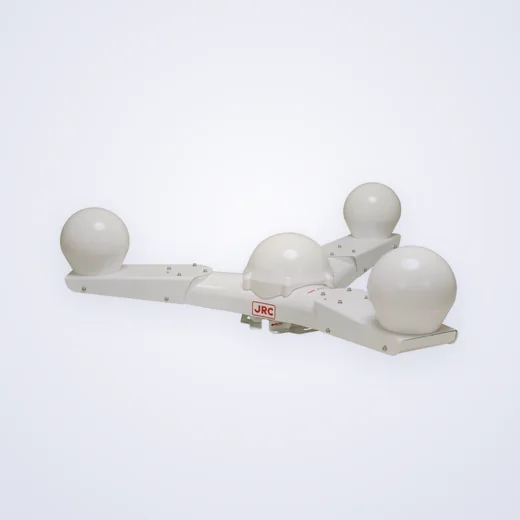
The SpectraTech JRC JLR-21 is listed in the product catalogue. This is a card reference, not a confirmation of today’s stock balance or the price of any complete set. The sensor, display, cables, mounts and documents are listed in an agreed quotation. The catalog photo shows the antenna part of the JRC without readable markings; it cannot be set scope of supply.
To request, describe the vessel, the task at low speed, the current sources of the course and the recipient devices. Attach the scheme and the delivery city: Moscow, St. Petersburg, Astrakhan, Vladivostok, Aktau or another region of Russia and Kazakhstan. The time and cost of delivery are confirmed at the address and composition. Then the purchase of JLR-21 has a clear purpose: to get the necessary data of the course and use them correctly on the bridge.
Questions before buying
Can COG be used instead of a course for any device?
Nope. COG describes the direction of movement relative to the ground. For the device that requires the direction of the nose, the corresponding source of the course and the input data are agreed.
Why does JLR-21 show a short-range COG field?
The JRC guide for screens specifies a COG dash at speeds less than 1 knot. This alone does not prove a loss of course measurement; check the specific field, statuses, and configuration documentation.
By the difference between HDG and COG can you immediately determine the flow rate?
Nope. The difference is considered together with speed, wind, maneuver and other dimensions. A single angle between directions is not a complete measurement of flow.
The main product in our catalog
JRC JLR-21
See the product card for the current price. the price of the commodity item in the card. configuration, condition, kit, availability and term are confirmed in the quotation.
Request a quoteDocumentation: JLR-21/31 Instruction Manual, hosted by JRC World, JRC JLR-21 brochure, 6pages. The manual is checked against the actual configuration and software version.